
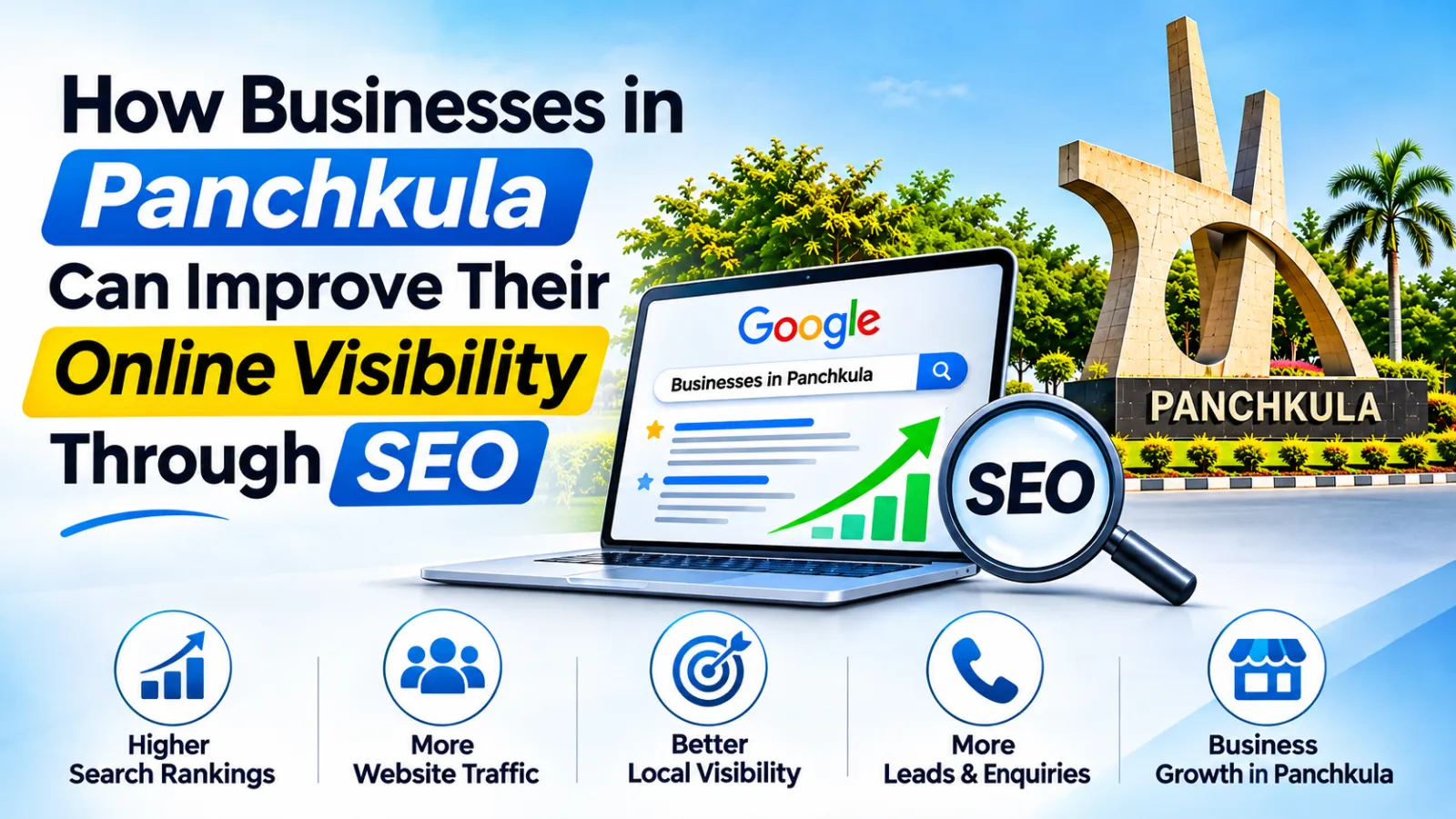
How Businesses in Panchkula Can Improve Their Online Visibility Through SEO
Share
In this article
For businesses in Panchkula, having a website is only the first step towards building an online presence. Potential customers often search Google before choosing a service provider, visiting a shop or contacting a local company. When a business does not appear in relevant search results, it can miss opportunities to connect with people who are already looking for what it offers.
Search engine optimisation (SEO) helps businesses improve how their websites appear in organic search results. A well-planned approach can make it easier for customers to discover a business, understand its services and take the next step.
Whether you operate a clinic, retail shop, coaching centre, restaurant, consultancy or home service business, the following steps can help improve your online visibility in Panchkula.
1. Understand What Your Potential Customers Search For
Effective SEO begins with understanding your audience. Think about the words people might use when searching for your products or services.
For example, someone looking for a local service may search using a combination of the service name and location. Others may search for a particular problem, compare providers or look for reviews before making a decision.
Start by identifying:
The main services or products your business offers.
The locations you serve within and around Panchkula.
Questions customers commonly ask before contacting you.
Search terms that indicate a person is ready to make a purchase or enquiry.
Google Search Console can help you understand which search queries already generate impressions and clicks for your website. Keyword research tools can also reveal related searches and opportunities to create useful content.
Choose keywords according to search intent rather than adding every location-based phrase to the same page. Each important page should have a clear purpose and target a relevant group of searches.
2. Improve Your Website's On-Page SEO
Your website should clearly explain what your business does, who it serves and how visitors can contact you. Search engines also use page content and structure to understand the purpose of a website.
Review the important elements on each page:
Page titles: Write a unique and descriptive title that explains the page topic. Include the main search phrase naturally where relevant.
Meta descriptions: Create useful descriptions that summarise the page and encourage searchers to visit it. Avoid repeating the same description across multiple pages.
Headings: Use a clear H1 heading followed by relevant H2 and H3 headings. Organise information in a logical order.
Page content: Explain your services, process, benefits and service areas in straightforward language. Include details that help visitors make an informed decision.
Internal links: Connect related pages using meaningful anchor text. This helps visitors discover additional information and gives search engines context about the relationship between pages.
Avoid creating multiple pages that target almost identical search terms without offering a distinct purpose. A clear website structure is generally more useful than having many repetitive pages.
3. Make Local SEO a Priority
Local SEO is particularly relevant to businesses that serve customers in a specific area. It helps your business become easier to discover when people search for nearby services.
Start by creating or improving your Google Business Profile. Make sure that your business name, address, phone number, website and operating hours are accurate.
You should also:
Select the most relevant primary and secondary business categories.
Add clear photographs of your premises, products, team or completed work.
List the services your business actually provides.
Respond professionally to customer reviews.
Keep business information updated.
Share genuine updates when there is something useful to communicate.
Your website should also explain where you operate. Mention Panchkula naturally in relevant service information, contact details and location descriptions. You can also refer to nearby areas such as Chandigarh, Mohali and Zirakpur when they are genuinely part of your service area.
Do not claim to serve locations where your business cannot provide its services. Accurate local information helps set the right expectations for customers.
4. Publish Content That Answers Real Customer Questions
A business blog can help attract visitors who are researching a service before making a decision. However, publishing articles just to include more keywords is unlikely to create meaningful value.
Think about the questions customers ask during sales conversations. A website designing company, for example, could publish an article explaining what makes a business website useful, while a clinic might answer common questions about its treatments and appointment process.
Useful content ideas include:
Questions customers ask before purchasing a service.
Comparisons between different products or service options.
Common problems and practical ways to address them.
Explanations of your working process.
Maintenance and after-purchase guidance.
Local information that is directly relevant to your customers.
Each article should address a specific topic in enough detail to help the reader. Add relevant internal links to service pages where they genuinely help someone take the next step.
5. Build a Website That Works Well on Mobile
Many people access websites through smartphones. A page that is difficult to read, slow to load or confusing to navigate can discourage visitors from contacting your business.
A useful business website should have:
A responsive layout that adapts to different screen sizes.
Readable text and properly spaced sections.
Clear navigation and service information.
Clickable phone numbers and visible contact options.
Compressed images and efficient page resources.
Secure HTTPS connections.
Forms that are easy to complete on mobile devices.
Website design also influences how visitors understand your business. A professional layout, relevant images and clear calls to action can make it easier for potential customers to explore your services.
Businesses planning a new website or redesign can explore website designing services in Panchkula as part of their wider digital marketing requirements.
6. Check Technical SEO Issues
Even useful content can struggle to perform when search engines cannot properly access or understand a website. Technical SEO focuses on the website's underlying structure and accessibility.
Some areas worth checking include:
Indexing: Confirm that important pages can be crawled and indexed by search engines. Review the indexing reports in Google Search Console.
Sitemaps: Maintain an accurate XML sitemap containing the important, indexable URLs on your website.
Robots.txt: Check that the file does not unintentionally block important pages or resources.
Canonical tags: Use appropriate canonical URLs to indicate the preferred version of a page when duplicate or similar URLs exist.
Broken links: Find and fix internal links that lead to missing pages or incorrect destinations.
Page performance: Review loading performance and Core Web Vitals, then address issues that affect the user experience.
Technical changes should be tested carefully. For example, blocking a page in robots.txt does not necessarily remove it from Google's index. Indexing and crawling controls need to be handled according to the actual requirement.
7. Use Paid Advertising Alongside SEO When Needed
SEO is a long-term approach, so businesses that need enquiries sooner may also consider paid advertising. Google Ads can help reach people searching for particular services, while Meta Ads can introduce products and offers to relevant audiences on Facebook and Instagram.
The choice depends on your business goals.
For example, a local service provider might use Google Ads to reach people actively searching for a service. A retail business may use Meta Ads to promote new products, seasonal offers or special campaigns.
Set a defined budget, choose relevant audiences and direct visitors to a landing page that matches the advertisement. Track calls, form submissions and other meaningful actions rather than judging performance only by clicks.
Paid advertising and SEO can support each other, but they serve different purposes. Advertising visibility generally depends on campaign funding, whereas organic SEO focuses on improving unpaid search visibility over time.
8. Measure SEO Performance Regularly
SEO improvements should be based on data rather than assumptions. Review performance regularly to understand which pages attract visitors and where potential customers may be dropping off.
Useful tools include:
Google Search Console: Monitor impressions, clicks, search queries, average positions and indexing issues.
Google Analytics 4: Understand website traffic, engagement and important user actions.
Microsoft Clarity: Review visitor behaviour through supported heatmaps and session recordings.
Website audit tools: Identify technical errors, broken links, missing metadata and other optimisation opportunities.
Look beyond keyword rankings. A page that attracts relevant visitors and generates enquiries may be more valuable than one that receives traffic without meaningful engagement.
Compare performance over consistent periods and use the findings to improve pages, content and conversion paths.
9. Choose an SEO Strategy That Fits Your Business
Every business has different goals, competition and resources. A new local company may need to establish its website and Google Business Profile first. An established business may need technical improvements, stronger service pages or a better content strategy.
A practical SEO plan generally includes:
A website and competitor review.
Keyword research based on customer intent.
Technical and on-page optimisation.
Local SEO improvements where relevant.
Useful content and internal linking.
Quality link-building activities.
Regular reporting and refinement.
Businesses exploring online marketing services for small businesses can consider how SEO, website design, local search and digital advertising fit together. The right combination should depend on the business's audience, budget and objectives rather than a fixed list of services.
Final Thoughts
Improving online visibility in Panchkula requires more than adding location keywords to a website. Businesses need useful pages, accurate local information, a technically accessible website and content that responds to what customers actually want to know.
Start with the areas that need the most attention, measure the results and improve the strategy as you learn more about your audience. Consistent, user-focused work can help your business become easier to find and give potential customers more confidence when choosing a service provider.
Frequently Asked Questions
1. How can a small business in Panchkula improve its Google visibility?
Start with keyword research, on-page SEO, a complete Google Business Profile and useful website content. Make sure your contact information and service areas are accurate, and monitor performance through Google Search Console.
2. How long does SEO take to show results?
SEO timelines vary according to website condition, competition, content quality and the work required. Some improvements may be visible earlier, while stronger organic performance can take several months. There is no guaranteed ranking timeline.
3. Is local SEO important for businesses in Panchkula?
Local SEO can be valuable for businesses that serve customers in Panchkula and nearby areas. It helps improve the accuracy and visibility of business information in local search results and Google Maps.
4. Does website design affect SEO?
Website design can influence usability, mobile experience, navigation and how easily visitors find information. Technical implementation and page performance also matter, so design and development should support both users and search accessibility.
5. Should a business use SEO and Google Ads together?
They can work together. SEO builds organic visibility over time, while Google Ads can provide paid visibility for selected searches. The right balance depends on the business's budget, competition and lead-generation goals.
6. How can I measure whether my SEO strategy is working?
Monitor organic clicks, impressions, relevant search queries, landing-page performance and enquiries. Google Search Console and Google Analytics 4 can help you understand whether your visibility is improving and whether visitors are taking useful actions.